Mempool.space Is a Bitcoin Mempool and Fee Explorer
Mempool.space Is a public Bitcoin explorer that helps users read pending transactions, fee estimates, recent blocks, and confirmation conditions before sending or tracking a transfer. Mempool.space shows how crowded the Bitcoin network is, how much users are currently paying in sats per vbyte, and where transactions sit before miners include them in a block. It is most useful for timing payments, checking transaction status, and understanding fee pressure without relying only on a wallet's default estimate.
Mempool.space is not a wallet, exchange, broker, or investment service. It does not move coins for you or promise that any transaction will confirm at a specific time. Instead, Mempool.space presents network data in a readable form so a person can make a better-informed decision about fees, urgency, and confirmation risk. That distinction matters because Bitcoin fees are market-driven: when block space is scarce, users who attach higher fees tend to be prioritized first.
What is Mempool.space?
Mempool.space is best understood as a Bitcoin mempool viewer and block explorer. The mempool is the waiting area for valid transactions that have been broadcast to the network but have not yet been mined into a block. Each Bitcoin node maintains its own version of this waiting area, so no single website can represent every node perfectly. Mempool.space provides a useful public view of this activity by collecting, organizing, and displaying Bitcoin transaction and block data.
Mempool.space helps translate a technical process into a visual interface. A new user may only want to know whether a payment is still pending. A more experienced user may want to compare fee bands, inspect a transaction ID, watch the next block form, or estimate whether a low-fee transaction is likely to wait. Mempool.space supports both levels of use by showing simple signals while still exposing deeper details.
The name Mempool.space points directly to the core idea: the mempool is a shared concept in Bitcoin, and block space is limited. Bitcoin blocks are produced on average about every ten minutes, but demand can change much faster than that. Mempool.space makes that pressure visible by showing pending transactions, block projections, and fee rates in a way that is easier to interpret than raw node output.
How does Mempool.space work for Bitcoin transactions?
Mempool.space works by observing Bitcoin network data and presenting it as a live explorer. When a wallet broadcasts a transaction, nodes check signatures, available inputs, size, fee rate, and other consensus or policy rules. If a transaction passes those checks, it may enter the mempool of many nodes. Mempool.space then helps users see whether that transaction is waiting, confirmed, replaced, or dropped from view.
Mempool.space uses fee rate as one of the most important signals. In Bitcoin, the cost of confirmation is usually discussed in satoshis per virtual byte, often shortened to sats/vB. A transaction with a higher sats/vB fee generally pays more for each unit of block space than a larger low-fee transaction. Miners usually prefer transactions that maximize fee revenue, so fee rate can matter more than the absolute fee amount.
Mempool.space also presents blocks as a sequence of confirmed history and expected upcoming space. The next block view is an estimate, not a guaranteed reservation. Transactions can be replaced, new higher-fee transactions can enter, miners can use different policies, and the next block can be found sooner or later than average. Mempool.space is therefore a decision aid, not a promise about confirmation order.
Why do people use Mempool.space before sending Bitcoin?
Mempool.space is often used before sending Bitcoin because fee timing can change the user experience. When the mempool is quiet, a modest fee may confirm quickly. When the mempool is crowded, the same fee may leave a transaction waiting for a long time. Mempool.space lets a user compare urgency against cost instead of accepting a fee estimate without context.
Mempool.space is especially helpful when a payment is time-sensitive, such as funding a service, moving coins to cold storage, consolidating UTXOs, or sending a transaction before a business deadline. It can also help when the payment is not urgent. If a user can wait, Mempool.space may show that lower fee bands have a reasonable chance of confirmation later, though that still depends on future network demand.
In practice, Mempool.space gives users a clearer view of several everyday questions:
- How busy is the Bitcoin mempool right now?
- What fee rates are users paying for likely near-term confirmation?
- Has a transaction ID reached the network and received confirmations?
- Are recent blocks full, and what fees did they include?
- Is a delayed transfer likely waiting because the fee was too low?
Mempool.space can also reduce confusion after a transaction has been sent. A wallet may show a pending state without explaining much else. Mempool.space can show whether the transaction is visible, how many confirmations it has, and whether its fee rate is below current market conditions. That extra context can prevent unnecessary resending attempts or panic, but users should still verify important details in their own wallet and with official service instructions.
How to read the fee estimates on Mempool.space
Mempool.space fee estimates are meant to help users choose a fee rate that matches their desired confirmation speed. A high-priority estimate may be suitable when the transaction must confirm soon. A lower-priority estimate may be acceptable when there is no rush. Mempool.space usually expresses these estimates in sats/vB because that unit reflects how miners compare transactions competing for block space.
Mempool.space should be read with context rather than as a single magic number. A transaction's virtual size depends on inputs, outputs, script type, and wallet behavior. For example, a simple spend from a modern SegWit address may be smaller than a complex transaction with many inputs. That means two users can choose the same fee rate but pay different total fees because their transactions use different amounts of block space.
Mempool.space can also show why wallet estimates vary. Wallets may use their own algorithms, local history, fallback settings, or service-specific assumptions. Mempool.space adds a public reference point, but it cannot know every wallet's policy or every miner's next choice. A user should compare the site's estimate with the wallet's fee controls and avoid sending funds with settings they do not understand.
How to track a pending transaction with Mempool.space
Mempool.space can be used after a transaction is broadcast by searching for the transaction ID. A transaction ID, often called a TXID, is the unique identifier most wallets provide after sending. If Mempool.space finds the TXID, the page can show its status, fee rate, inputs, outputs, size, and confirmation count. If it cannot find the TXID, the transaction may not have propagated, may have been rejected, or may not yet be visible from the site's data sources.
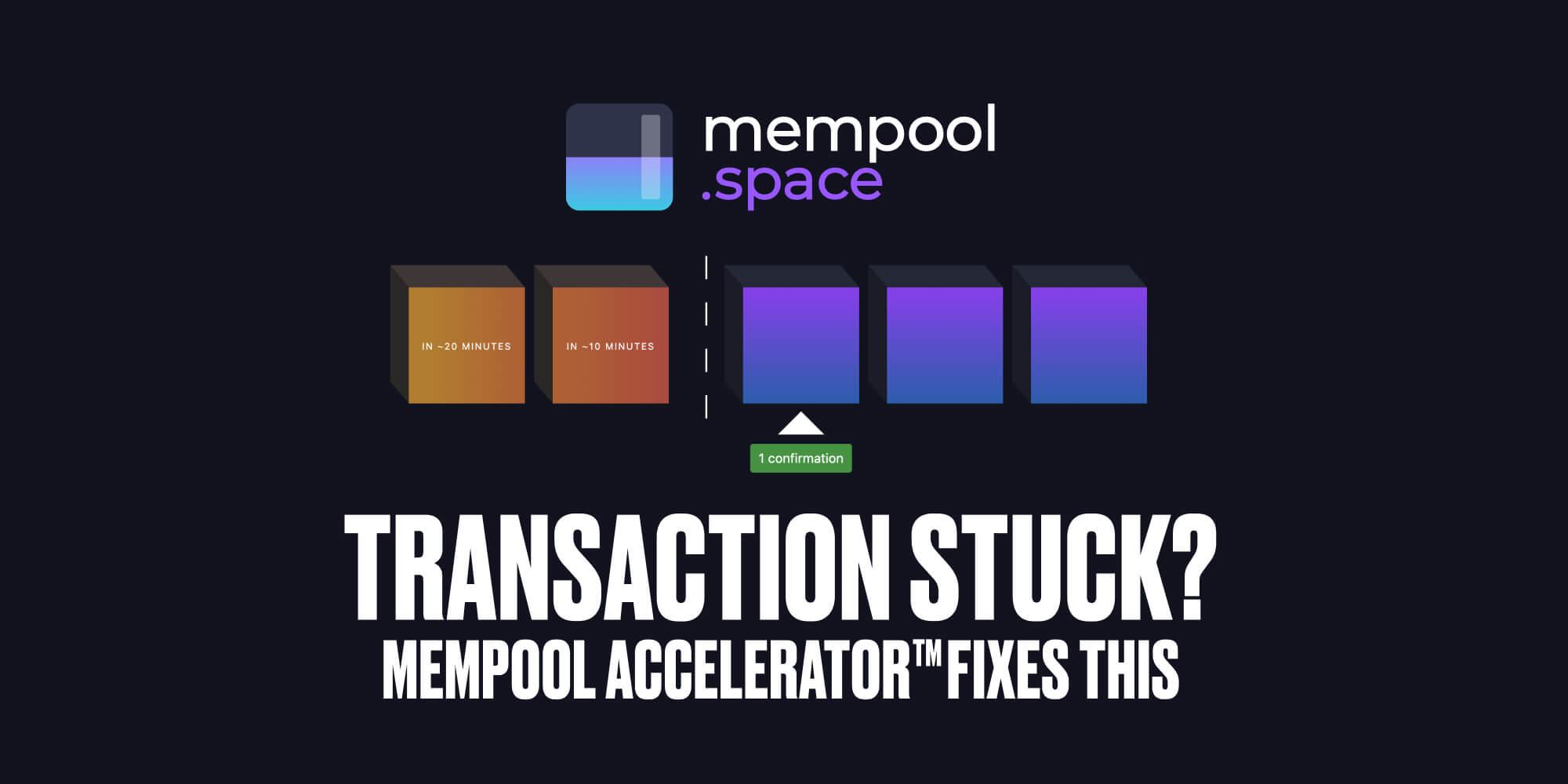
Mempool.space makes confirmation easier to understand because it shows when a transaction has been included in a block. One confirmation means the transaction is in a mined block. Additional confirmations accumulate as later blocks are built on top of that block. Different services require different confirmation counts before treating a payment as settled, so users should follow the receiving service's stated policy rather than assuming one confirmation is always enough.
Mempool.space can also help identify common causes of delay. If a transaction has a very low fee rate compared with current mempool conditions, it may wait until demand falls. If it signals replace-by-fee, the sender's wallet may support increasing the fee. If child-pays-for-parent is possible, a receiving wallet or related spend may help incentivize confirmation. These tools have technical and wallet-specific requirements, so users should be careful before attempting them.
Is Mempool.space safe to use?
Mempool.space is generally safe to view as an informational website, but users should understand what safety means in this context. Mempool.space does not need a seed phrase, private key, wallet password, or exchange login to show public blockchain data. No legitimate block explorer needs those secrets. If any page, message, or imitation site asks for wallet recovery words, the safest response is to leave immediately.
Mempool.space displays public Bitcoin data, which also means privacy requires attention. Searching for an address or transaction can reveal interest in that activity to the website operator, browser, network provider, or other systems involved in the connection. Mempool.space is useful, but privacy-conscious users may prefer Tor, a self-hosted instance, their own Bitcoin node, or wallet-integrated tools when inspecting sensitive transactions.
Mempool.space should not be treated as financial advice. Bitcoin fees, confirmation times, and network conditions can change quickly. A fee that looks reasonable now can become less competitive if demand rises before the next block is mined. Users moving significant value should verify addresses carefully, test workflows when appropriate, use trusted wallet software, and consult official sources for security-critical instructions.

What are the main benefits of Mempool.space?
Mempool.space gives Bitcoin users visibility into a process that can otherwise feel opaque. Instead of waiting for a wallet to update, a user can inspect the mempool, compare fee bands, and understand why a transaction is moving or waiting. This is valuable because Bitcoin's settlement model is different from card payments, bank transfers, and custodial exchange balances. The chain confirms in blocks, and block space has a price.
Mempool.space also supports education. By watching blocks fill, users can see how miners select transactions, why fee spikes happen, and how pending transactions compete. Mempool.space turns abstract terms like mempool, confirmation, block height, fee rate, and UTXO into observable events. That makes it useful for beginners learning Bitcoin and for experienced users who want a quick operational dashboard.
Mempool.space is also relevant to developers, merchants, analysts, miners, and node operators. Developers can inspect transaction behavior, merchants can check payment status, analysts can watch congestion, and operators can compare observed network conditions with their own systems. Mempool.space is not the only tool for these jobs, but it is widely recognized because it combines a clean interface with Bitcoin-specific depth.
How does Mempool.space compare with other Bitcoin explorers?
Mempool.space belongs to the broader category of Bitcoin block explorers, but its emphasis is narrower and more practical than a general blockchain search page. Many explorers show addresses, balances, transaction pages, and block history. Mempool.space does those jobs while putting unusual emphasis on the live mempool, fee estimates, block construction, and visual transaction flow.
Mempool.space can be compared with wallet fee estimators, full node tools, and other public explorers. A wallet estimator is convenient because it is where the transaction is created. A full node gives the strongest independent verification when properly maintained. Other explorers may offer different indexing, charts, or multi-chain coverage. Mempool.space stands out for users who primarily want a Bitcoin-focused view of pending activity and fees.
| Tool type | Best use | Important limitation |
|---|---|---|
| Mempool.space | Reading Bitcoin mempool conditions and fee pressure | Public view may not match every node exactly |
| Wallet fee estimator | Choosing a fee while creating a transaction | May hide assumptions or use conservative defaults |
| Self-hosted node | Independent verification and privacy control | Requires setup, storage, bandwidth, and maintenance |
| General block explorer | Searching transactions and addresses across broad data | May provide less detail about live mempool dynamics |
Mempool.space is often strongest when used alongside a wallet rather than instead of one. The wallet creates and signs the transaction. Mempool.space helps interpret the network conditions around that transaction. For larger transfers, careful users may also compare more than one data source, especially if confirmation timing or privacy is important.
How to get started with Mempool.space
Mempool.space is easiest to learn by starting with one concrete goal. If you have not sent a transaction yet, look at the current fee estimates and recent blocks before choosing a wallet fee setting. If you have already sent a transaction, search the TXID and check whether it is pending or confirmed. Mempool.space becomes clearer when every number is tied to a real question.
Mempool.space can then be used to build better habits. Before consolidating coins, check whether fees are unusually high. Before sending a time-sensitive payment, compare fast and slower fee bands. After receiving Bitcoin, confirm that the transaction has the number of confirmations required by your own risk tolerance or by the receiving service. These habits do not remove risk, but they make the process less mysterious.
For a new user, the most important caution is to separate observation from control. Mempool.space can show public network information, but it cannot reverse a mistaken payment, recover a lost private key, or force a miner to include a transaction. Bitcoin transactions are difficult or impossible to undo once confirmed. Always verify the destination address, amount, network, and wallet prompts before broadcasting.
What should users remember about Mempool.space?
Mempool.space is a practical window into Bitcoin's pending transaction layer. It helps users see fee pressure, block activity, transaction status, and confirmation progress in one place. Mempool.space is useful because it makes the cost and timing of Bitcoin settlement more visible, especially during busy periods when wallet defaults may not explain what is happening.
Mempool.space is still only one source of information. Network conditions can shift, public explorers have visibility limits, and fee estimates are not guarantees. The best use of Mempool.space is careful and contextual: compare the data with your wallet, verify important details with official sources, protect private keys, and treat every Bitcoin transaction as a serious action before it is sent.
Questions and Answers
What is Mempool.space used for?
Mempool.space is used to view Bitcoin mempool conditions, fee estimates, pending transactions, recent blocks, and confirmation status. It helps users understand how busy the Bitcoin network is before sending a transaction or while waiting for one to confirm. It is an informational explorer, not a wallet or exchange, so it cannot move funds or change a transaction by itself.
Does Mempool.space guarantee Bitcoin confirmation times?
No. Mempool.space can estimate confirmation likelihood based on visible mempool conditions and recent block activity, but it cannot guarantee a specific confirmation time. Bitcoin blocks arrive on a probabilistic schedule, new transactions can change fee pressure, and miners may use different selection policies. Users should treat estimates as guidance and verify important payment requirements with the receiving service.
How do I check a Bitcoin transaction on Mempool.space?
To check a transaction, copy the transaction ID from your wallet and search for it on Mempool.space. If the transaction is visible, the page can show whether it is pending or confirmed, its fee rate, size, inputs, outputs, and confirmation count. If it does not appear, it may not have propagated, may have been rejected, or may be temporarily outside the site's visible data.
Why does Mempool.space show fees in sats per vbyte?
Mempool.space shows Bitcoin fees in sats per vbyte because miners usually compare transactions by fee rate rather than just the total fee amount. A transaction's virtual size depends on how it is constructed, including inputs, outputs, and script type. Sats per vbyte helps users compare how much they are paying for each unit of block space.
Is it safe to search an address or transaction on Mempool.space?
Searching public Bitcoin data on Mempool.space is generally safe from a funds-control perspective because the site does not need private keys or seed phrases. However, privacy matters. Looking up an address or transaction can reveal interest in that activity to the website, browser, network, or other observers. Privacy-conscious users may prefer their own node, Tor, or wallet-integrated tools.
Can Mempool.space help if my Bitcoin transaction is stuck?
Mempool.space can help you understand why a transaction may be delayed by showing its fee rate compared with current mempool conditions. If the fee is low, it may need to wait for congestion to fall. Some wallets support replace-by-fee or child-pays-for-parent, but those options depend on transaction settings and wallet support. Always follow trusted wallet documentation before attempting a fee bump.
Is Mempool.space the same as a Bitcoin wallet?
No. Mempool.space is not a wallet and should not be used as one. It displays public Bitcoin network information, including transactions, blocks, and fee estimates. A wallet stores keys, creates transactions, signs them, and broadcasts payments. Mempool.space can help you interpret what happens after broadcast, but it cannot authorize payments or recover wallet access.