Mempool.space Is a Bitcoin Mempool and Fee Dashboard
Mempool.space Is a public Bitcoin dashboard that helps users understand pending transactions, current fee pressure, recent blocks, and likely confirmation timing. It is commonly used as a Bitcoin mempool viewer, block explorer, and fee estimate reference. Mempool.space does not control Bitcoin transactions or guarantee confirmations, but it can help readers choose a fee strategy, inspect transaction status, and understand why the network feels fast or congested at a given moment.
Mempool.space gives a visual answer to a question many Bitcoin users ask only after a transfer feels slow: what is happening between broadcast and confirmation? A Bitcoin transaction usually waits in the mempool before a miner includes it in a block. The fee rate attached to that transaction, normally measured in satoshis per virtual byte, affects how attractive it is to miners. Mempool.space makes that competition easier to see without requiring a person to run command-line tools or interpret raw node output.
Mempool.space should be understood as an informational interface rather than a wallet, exchange, investment product, or official authority over the Bitcoin network. It observes and presents network data, but Bitcoin itself is decentralized. Different nodes can sometimes see slightly different mempool states, and fee estimates can change quickly when demand rises. For important transfers, users should verify details with their wallet, their own node when available, and official documentation from the tools they rely on.
What is Mempool.space?
Mempool.space is a web-based Bitcoin explorer focused on the mempool, blocks, mining activity, and fee rates. The term mempool refers to the pool of valid but unconfirmed transactions known to a Bitcoin node. When someone broadcasts a transaction, it does not instantly become final. It waits until miners choose it for a block, and that waiting area is what Mempool.space helps users inspect.
Mempool.space is especially useful because it connects several Bitcoin concepts in one place. A user can look at pending transaction volume, compare fee bands, inspect recent blocks, and search for a transaction ID or address. The interface is designed around practical questions: how crowded is the network, what fee rates are clearing now, and why did one transaction confirm faster than another?
Mempool.space also functions as a learning tool. For a new user, the dashboard turns abstract Bitcoin mechanics into a visible queue. Larger colored bands can represent groups of transactions paying different fee rates, while block displays show how much room miners had and which transactions were selected. That visual context makes fee markets easier to understand than a single number shown inside a wallet.
How does Mempool.space work with Bitcoin transactions?
Mempool.space works by presenting data gathered from Bitcoin nodes and related network sources. When transactions are broadcast, nodes validate basic rules such as signatures, available inputs, and transaction format before keeping them in their mempool. Miners then assemble blocks from transactions they know about, often prioritizing higher fee rates because block space is limited.
The protocol does not have one global mempool that every participant sees in exactly the same way at every second. Each node has its own view based on what it has received, what it accepts under policy rules, and what it has evicted during congestion. Mempool.space can provide a very helpful public view, but users should remember that it is still an observation of a decentralized system rather than the system itself.
Mempool.space also helps explain why fee rate matters more than total fee alone. A small transaction can pay a modest absolute fee and still confirm quickly if its fee rate per vbyte is competitive. A larger transaction may need a higher total fee because it uses more block space. This distinction is central to practical Bitcoin fee planning.
Why do people use Mempool.space before sending Bitcoin?
Mempool.space is often checked before sending Bitcoin because fee conditions can change throughout the day. When many users are trying to transact, the waiting area fills with competing transactions. When activity cools down, lower fee rates may become reasonable. Looking at Mempool.space before a transfer can help a user avoid blindly overpaying or underpaying for the confirmation speed they actually need.
Mempool.space can be useful for several everyday workflows:
- Estimating a fee rate before sending a non-urgent Bitcoin transaction.
- Checking whether a pending transaction is likely to confirm soon.
- Comparing recent block activity with wallet fee recommendations.
- Learning how satoshis per vbyte affects transaction priority.
- Watching congestion during market volatility, exchange activity, or major network events.
Mempool.space is not a substitute for a wallet’s transaction controls. A wallet still creates, signs, and broadcasts the transaction. The dashboard simply helps the user understand the public network conditions around that action. In practice, many experienced users compare their wallet’s suggested fee with Mempool.space and then choose a fee that matches their urgency.
How can you read the Mempool.space fee dashboard?
Mempool.space usually presents fee estimates in tiers that correspond to likely confirmation targets. A higher fee rate may be shown for faster confirmation, while lower rates may be suitable for users who can wait. The important point is that these are estimates, not promises. Miners choose transactions based on incentives and policies, and new high-fee transactions can arrive after a user broadcasts.
Mempool.space is easiest to read when the user starts with the block space concept. Bitcoin blocks have limited capacity, so pending transactions compete for inclusion. If the mempool has many transactions paying above a given fee rate, a new transaction below that level may wait. If the mempool is nearly empty, lower fee rates may clear faster than expected.
The fee bands on Mempool.space can also reveal whether congestion is shallow or deep. A small cluster of high-fee transactions may disappear after a few blocks. A large backlog across many fee levels can take longer to clear, especially if new demand keeps arriving. This is why a fee that looked adequate ten minutes ago may become less competitive during a sudden surge.
How do you check a pending transaction on Mempool.space?
Mempool.space can be used to search for a transaction ID, often called a TXID. A Bitcoin wallet typically shows this identifier after broadcast. By pasting the TXID into Mempool.space, a user can see whether the transaction is unconfirmed, how many confirmations it has, what fee rate it paid, and whether it appears in the public mempool view.
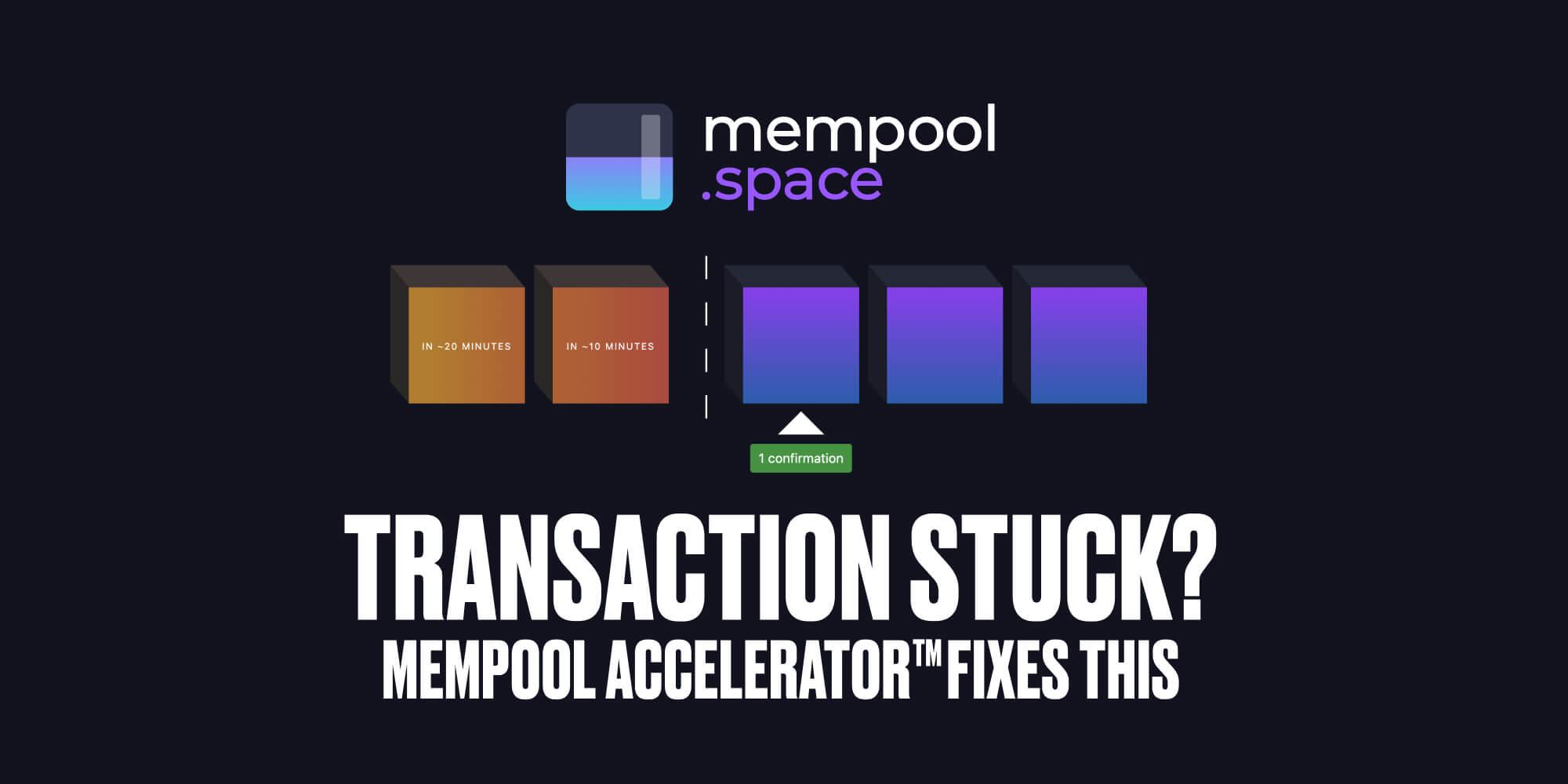
Mempool.space may show a transaction as waiting if it has not yet been included in a block. Once a miner includes it, the transaction receives its first confirmation. Additional confirmations arrive as more blocks are built on top of that block. Many services wait for several confirmations before treating a payment as settled, especially for larger amounts.
In practice, a user checking Mempool.space should compare three details: the transaction fee rate, the current competitive fee range, and whether the transaction uses features such as replace by fee. Replace by fee, often shortened to RBF, can let a sender broadcast a replacement transaction with a higher fee if their wallet supports it. Child pays for parent, or CPFP, can sometimes help when the recipient or sender spends an unconfirmed output with a higher fee. These tools have wallet-specific rules, so users should verify them inside the wallet documentation before acting.
What are the main benefits of using Mempool.space?
Mempool.space makes Bitcoin’s fee market more understandable. Without a dashboard, a user may see only a wallet estimate and a pending status. With Mempool.space, that same user can see whether the delay is normal, whether the selected fee was too low for current conditions, and whether recent blocks are clearing the backlog.
Mempool.space is also useful for education because it shows the relationship between transactions, blocks, and miners in real time. The user can observe how a block arrives, which fee rates clear, and how the mempool changes afterward. This teaches a practical lesson: Bitcoin settlement is probabilistic before confirmation and increasingly final as confirmations accumulate.
Mempool.space can help teams, merchants, and support desks explain transaction timing without making vague guesses. A payment processor or customer support agent can look at the fee environment and describe why a transaction is still pending. They should still avoid guaranteeing timing, because network demand and mining intervals are not fully predictable.
For readers comparing basic resources, an internal can be a helpful companion to a hands-on dashboard. Users who want a broader background can also review a before interpreting fee bands and confirmation targets.

What risks and limitations should users understand?
Mempool.space is a visibility tool, not a safety guarantee. It can show data about a transaction, but it cannot reverse an incorrect payment, recover funds sent to the wrong address, or force miners to include a transaction. Bitcoin payments are generally difficult or impossible to undo after confirmation, so users should check addresses, amounts, wallet warnings, and recipient details before sending.
Mempool.space may also be interpreted incorrectly by new users. A low fee environment does not mean every low-fee transaction will confirm instantly. A high fee estimate does not mean a user must always pay the highest displayed amount. The right fee depends on urgency, transaction size, wallet capabilities, and the sender’s tolerance for waiting.
Crypto and Bitcoin activity involves financial risk. Fees can spike, market prices can move, and user mistakes can be costly. Mempool.space can improve awareness, but it should not be treated as financial advice or as a recommendation to buy, sell, hold, or move any asset. For high-value transfers, many users send a small test transaction first, verify all wallet settings, and confirm the recipient’s requirements directly.
How does Mempool.space compare with wallets and other explorers?
Mempool.space overlaps with Bitcoin wallets and block explorers, but it serves a different primary purpose. A wallet is where a user manages keys, creates transactions, signs them, and broadcasts them. A general block explorer lets a user inspect blocks, transactions, and addresses. Mempool.space combines explorer functions with a strong emphasis on pending transaction pressure and fee estimation.
Mempool.space can complement a wallet’s built-in fee selector. Some wallets use their own estimation algorithms, some connect to a server, and some let advanced users set custom sat/vB values. Mempool.space provides an independent visual reference that helps users understand whether a wallet estimate seems conservative, aggressive, or aligned with current network conditions.
Other explorers and node dashboards may show similar data, and users who run their own Bitcoin node can rely on local tools for a more sovereign view. Mempool.space remains popular because it is accessible, visual, and easy to share in support conversations. Still, privacy-conscious users should understand that searching addresses or transactions on any public website can reveal interest in those records to the service operator or network observers.
How can a beginner build a practical Mempool.space workflow?
Mempool.space becomes most useful when it is part of a simple routine rather than a last-minute panic tool. Before sending, a user can check current fee rates and decide how soon confirmation is needed. During sending, the user can choose a wallet fee option that matches that urgency. After sending, the user can search the TXID and watch confirmation progress.
A beginner-friendly workflow looks like this:
- Open Mempool.space and look at current fee pressure before creating the transaction.
- Compare the displayed fee tiers with the wallet’s recommended fee options.
- Choose a fee based on urgency, not on fear of missing the next block.
- Confirm the receiving address, amount, and network before signing.
- After broadcast, search the TXID on Mempool.space and monitor confirmations.
- If the transaction stalls, check whether the wallet supports RBF or CPFP before taking action.
Mempool.space can also teach patience. Bitcoin blocks are found at variable intervals, and a few slow blocks do not necessarily mean something is wrong. If the transaction fee rate is close to the clearing range, it may confirm once enough block space becomes available. If it is far below the active range, the user may need to wait longer or use wallet-supported fee management tools.
When is Mempool.space most useful?
Mempool.space is most useful when transaction timing matters but does not justify guesswork. A user paying an invoice, moving funds to cold storage, withdrawing from an exchange, or consolidating UTXOs can benefit from understanding fee pressure. The dashboard is also helpful during periods of heavy market activity, when many users move coins at once and the mempool can change rapidly.
Mempool.space is less necessary for users who are sending tiny, non-urgent transactions and are comfortable waiting, although even those users can learn from it. It is also not the final authority for services that have their own confirmation policies. An exchange, merchant, or custodian may require a specific number of confirmations regardless of what Mempool.space shows.
Mempool.space fits best as a practical Bitcoin literacy tool. It helps users see the fee market, inspect transactions, and make more informed timing decisions without pretending that the network is perfectly predictable. Used carefully, Mempool.space can reduce confusion around pending transactions and make Bitcoin’s block-by-block settlement process easier to understand.
Questions and Answers
What is Mempool.space used for?
Mempool.space is used to view Bitcoin mempool activity, inspect blocks and transactions, and estimate fee rates for different confirmation targets. It helps users understand whether the network is quiet or congested before sending Bitcoin. It does not send transactions, control confirmations, or replace a wallet, but it can provide useful context for fee selection and transaction monitoring.
Does Mempool.space guarantee Bitcoin transaction confirmation times?
No. Mempool.space provides estimates based on visible network conditions, recent blocks, and current fee pressure, but it cannot guarantee when miners will include a transaction. Bitcoin block timing varies, and new higher-fee transactions can change the fee market quickly. Users should treat the dashboard as a guide and verify important details with their wallet or node.
How do I check my Bitcoin transaction on Mempool.space?
Copy the transaction ID from your Bitcoin wallet and search for it on Mempool.space. The transaction page can show whether it is unconfirmed, how many confirmations it has, the fee rate it paid, and related transaction details. If the transaction is pending, compare its fee rate with current fee levels to understand whether it may need more time.
Is Mempool.space safe to use?
Mempool.space is generally used as a public information tool, but users should understand its limits. It should not be used to enter seed phrases, private keys, passwords, or wallet recovery words. Searching public transaction data is different from controlling funds. For privacy, remember that looking up addresses or transactions on any public explorer can reveal interest in those records.
Why does my wallet fee estimate differ from Mempool.space?
Wallets may use different fee estimation methods, data sources, confirmation targets, and safety margins. Mempool.space shows a public view of fee pressure, while your wallet may account for its own broadcast method or default urgency settings. A difference does not automatically mean one is wrong; it means you should compare the assumptions before choosing a fee.
Can Mempool.space help with a stuck Bitcoin transaction?
Mempool.space can help you understand why a transaction appears stuck by showing its fee rate and current mempool conditions. It cannot directly speed up or cancel the transaction. If your wallet supports replace by fee or child pays for parent, those options may help in some cases, but you should follow your wallet’s official instructions before using them.
Is Mempool.space affiliated with Bitcoin or a wallet provider?
Mempool.space should be viewed as an independent informational dashboard and explorer, not as Bitcoin itself and not as your wallet provider. Bitcoin is a decentralized network, and wallets are separate tools that hold keys and create transactions. Always verify transaction details inside the wallet you use and rely on official sources for wallet-specific features.